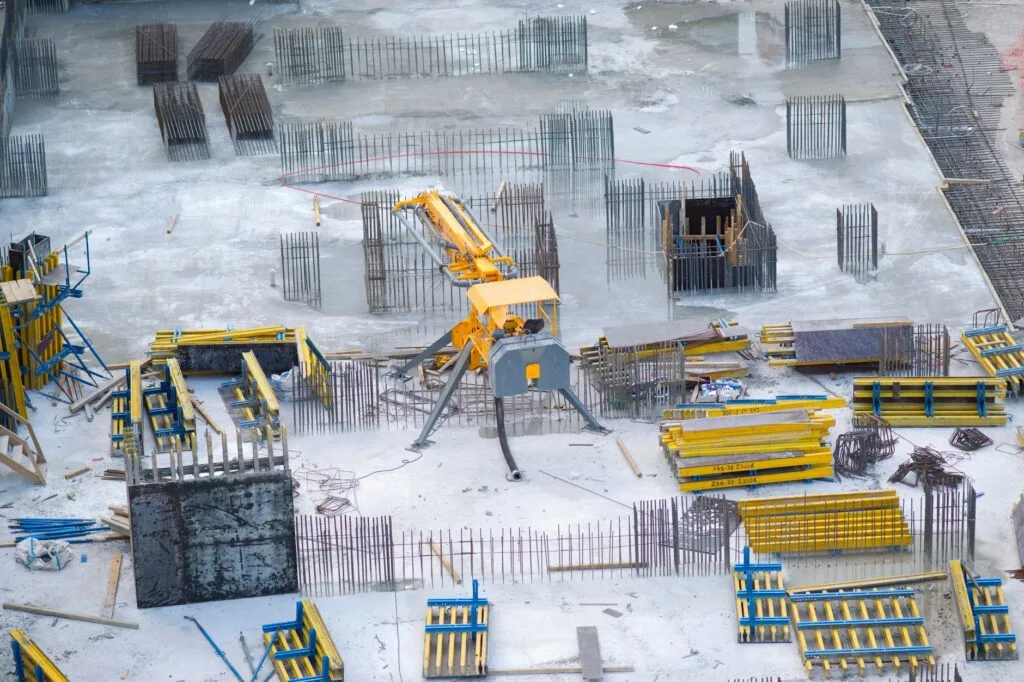
Commercial concrete in Columbus, Ohio runs on different numbers than residential work: heavier loads, higher-strength mixes, and a schedule that has to fit around a working business. Sedona Concrete pours commercial flatwork across Central Ohio for property managers, facility teams, and general contractors.
Commercial flatwork for Columbus businesses
Exterior flatwork covers most of what a commercial property sits on and drives over:
- Parking pads and aprons
- Dumpster pads and approach slabs
- Drive approaches and entrances
- ADA ramps, landings, and accessible routes
- Loading dock areas and truck aprons
- Equipment pads, curbs, and site sidewalks
The detail that matters is usually the load path. A dumpster pad gets designed for the front axle of a loaded collection truck, not for the dumpster; the truck is the heaviest thing that will ever sit on it. ADA ramps carry hard numbers too: a running slope no steeper than 1:12, limited cross slope, and level landings. Close doesn't pass inspection, so ramps get formed to the number.
Thicker sections, higher PSI
Residential flatwork is commonly poured around 3,500 PSI. Commercial exterior work is usually specified higher, 4,000 PSI and up, with air entrainment for freeze-thaw exposure. Sections run thicker where trucks track: six inches or more, against four for a typical walk.
On engineered projects, the mix design, reinforcement, and joint layout come off the drawings, and the pour follows them. Where no engineer is involved, the slab still gets sized around its actual traffic, because an underbuilt pad is the most expensive kind.
Working around your operations
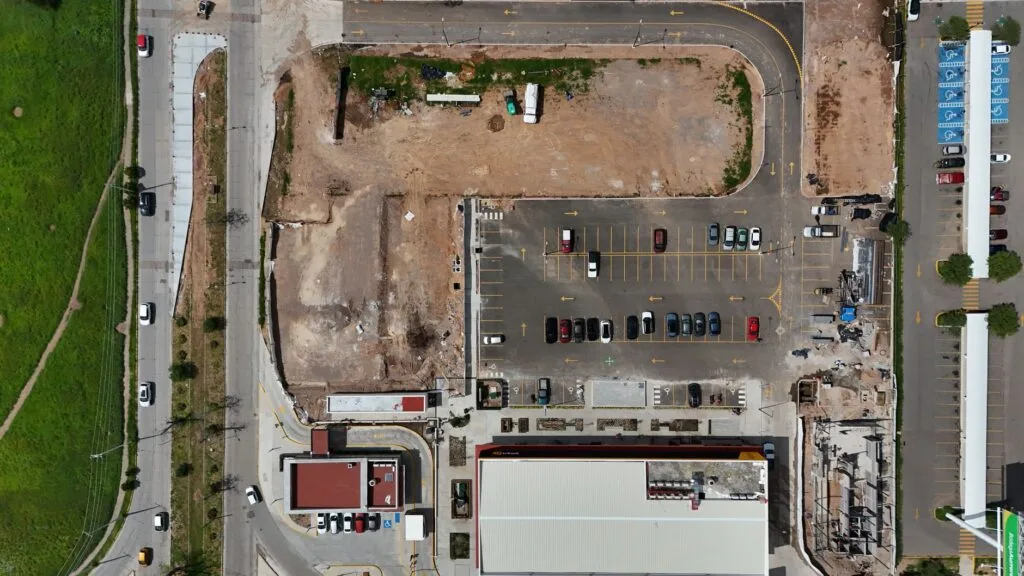
A pour on an occupied site is a logistics problem before it's a concrete problem. Lots get poured in phases so traffic and deliveries keep moving, and the sequence gets planned around your hours, not ours.
Cure time is the constraint nobody can talk their way around. New concrete needs about 7 days before it carries vehicle traffic, and full design strength arrives at about 28. Phasing plans are built on those numbers: saw cuts happen early, barricades stay up as long as the concrete needs, and a section doesn't open a day before it's ready.
Estimates start with a site visit
A commercial bid off a phone call is a guess. Estimates here start with a walk of the site: existing slab condition, subgrade, drainage, truck access, and what the operation needs to keep running while the work happens. The number that comes out of that visit is scoped to the site rather than a unit price with an asterisk.
General contractors can skip the visit and send drawings. We bid from plans and pour to spec.
If an existing lot or pad is failing rather than missing, start with concrete repair and resurfacing; replacement isn't always the answer.