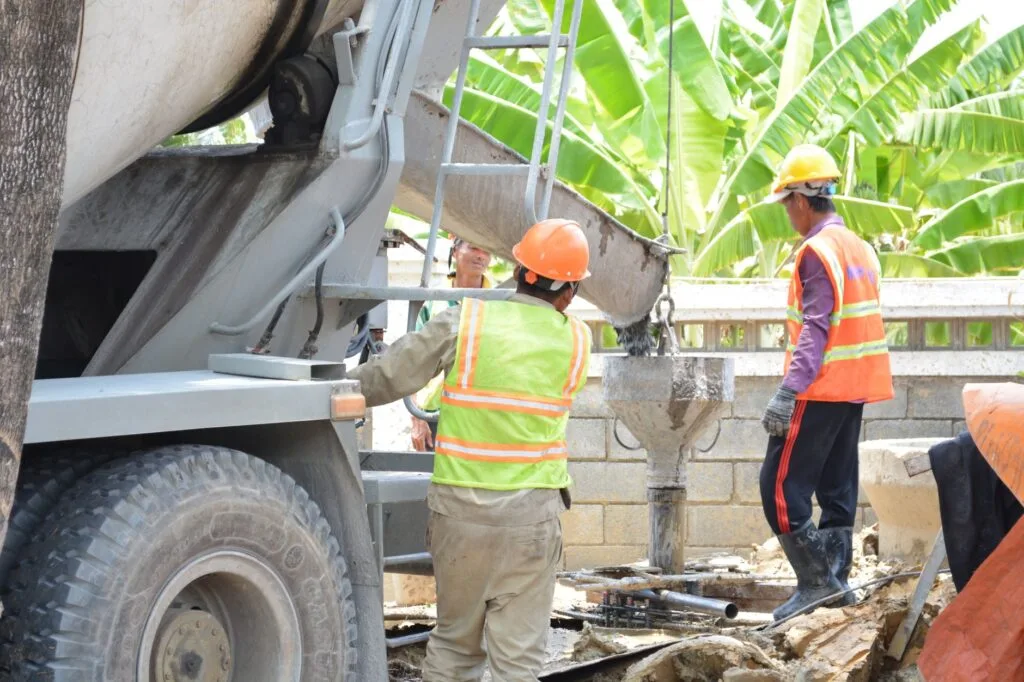
New concrete driveways and full driveway replacement
A concrete driveway in Columbus, Ohio has a rough life. It carries vehicles year round, freezes and thaws all winter, and picks up road salt every time a car pulls in. Sedona Concrete pours new driveways and replaces failed ones across Columbus, Granville, and the rest of Licking County.
Most of what decides how long a driveway lasts sits under the slab. Soft or poorly drained ground moves, and concrete above moving ground cracks no matter how clean the pour was. That's why base prep gets as much attention here as the finish.
What's included in a driveway install
Scope shifts a little between a new pour and a tear-out, but a full driveway job covers:
- Demolition and haul-off of the old slab on replacements
- Grading, then 4 to 6 inches of compacted gravel base
- Forms set to final grade, sloped so water runs away from the garage
- Wire mesh or fiber reinforcement
- A 4-inch pour, screeded flat and floated by hand
- Control joints at 8 to 12 foot spacing
- Broom finish for traction, with decorative border options
Base prep, thickness, and joints for Columbus driveways
Four inches is the residential standard, and it's the right call for cars and light trucks. Park anything heavier on it, a loaded work truck, a camper, a boat trailer, and the slab should go to 5 or 6 inches with a thicker base underneath.
Control joints give concrete a straight place to crack instead of a random one. On a 4-inch driveway they run every 8 to 12 feet, cut about an inch deep. Get the spacing wrong and the slab picks its own pattern, which never looks good.
Finish options
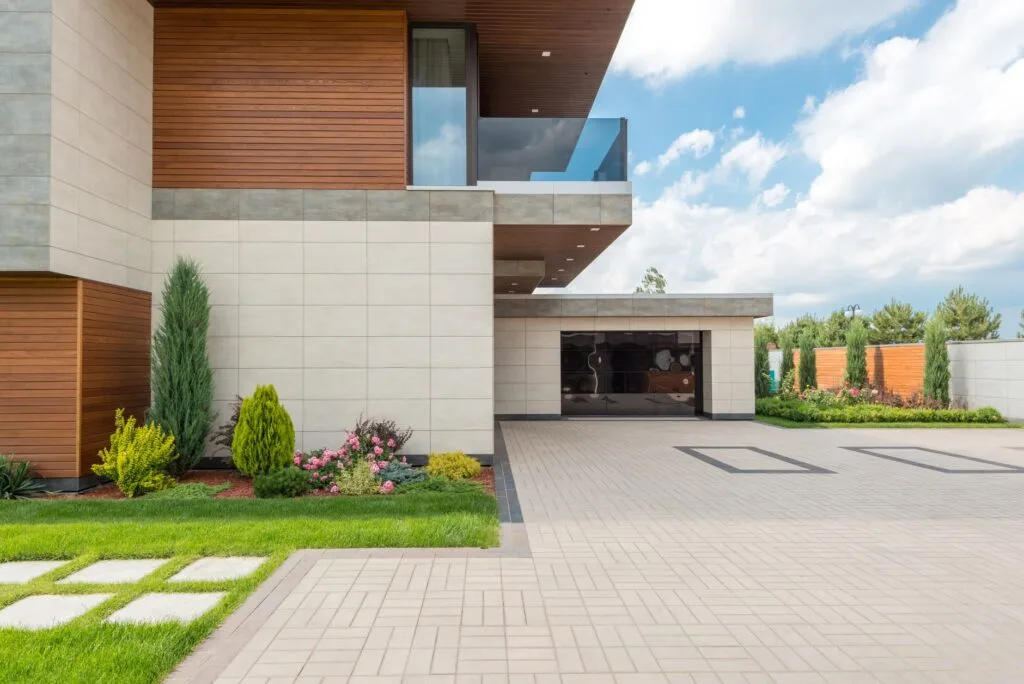
Most driveways get a broom finish: a light texture dragged across the surface after floating, there to keep tires and shoes from sliding when the slab is wet. Smooth trowel looks sharp but turns slick in rain, so it stays indoors. For more character, a stamped or decorative border can frame a broom-finished field.
When to repair and when to replace
Not every cracked driveway needs to come out. Hairline cracks, shallow spalling, and surface wear can often be handled with concrete repair and resurfacing for a fraction of the cost of a new slab.
Replacement is the answer when problems run deeper: sections that have settled unevenly, cracks wider than a quarter inch that keep growing, panels that heave every winter, or a base washing out underneath. New surface material over a failed base is money spent twice.
Not sure which side your driveway lands on? Send a photo along with your estimate request.